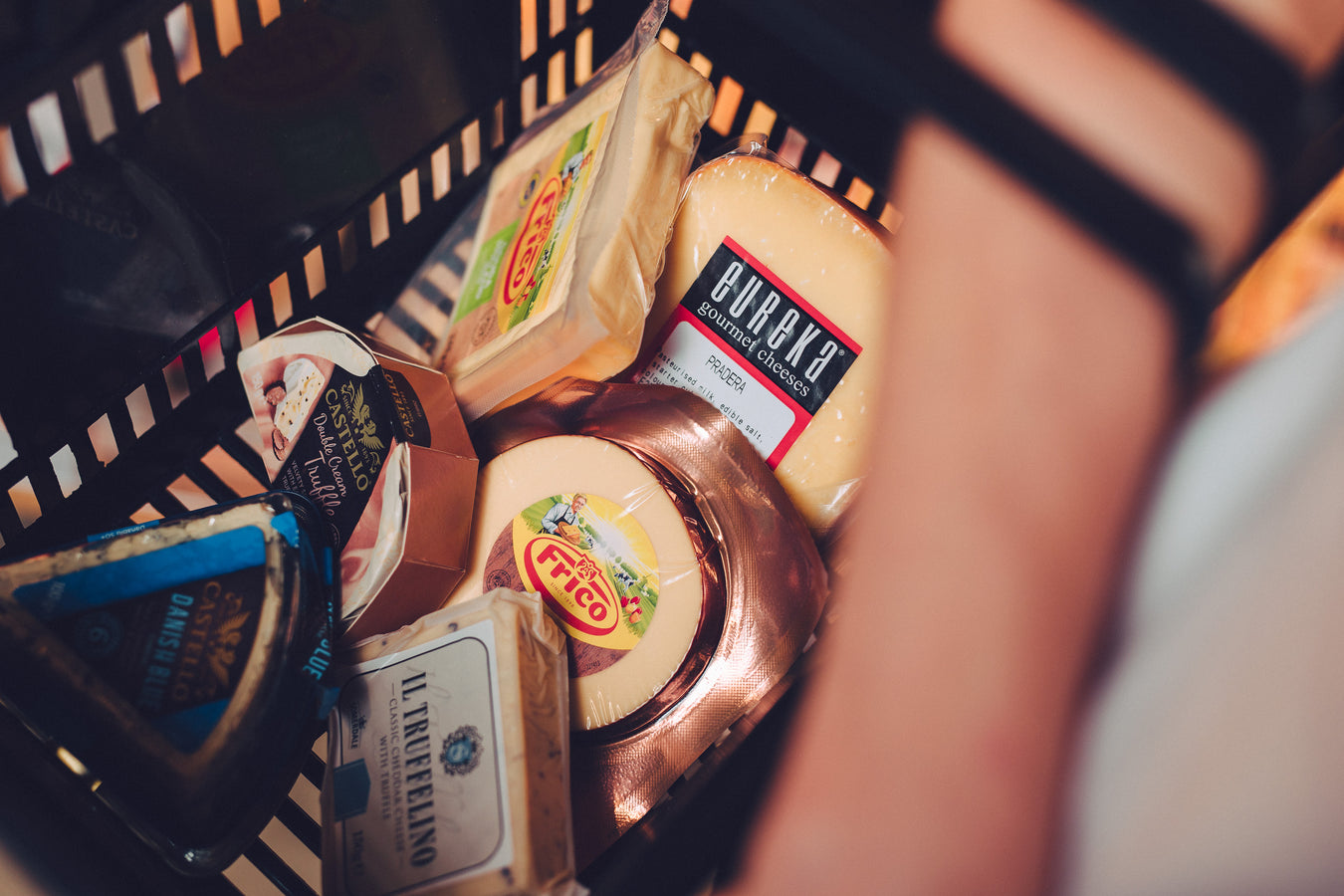



Browse our Recipe pages for inspiration and visit our forums where you can share your recipes with us. We'd love to hear how successful you are in the kitchen!
Send us an email with your favourite cheese recipes and you might see them published on our recipes page!
Cheese has such a variety of aromas, flavours and textures that matching of cheeses with other cheeses and with other foods is a matter of personal taste. When putting together cheeses on a cheeseboard it is a good idea to create variety but when it comes to cooking, some cheeses have a delicate texture and flavour which will compliment other foods but some, such as blue cheese , have a strong taste and pungent aroma and can dominate the other foods it is mixed with.
Browse through our Recipe pages which are full of great ideas on the use of cheese and our other Gourmet Deli items.
Many cheese lovers have experienced the delight of blue cheese and a sweet dessert wine such as a Sauternes or a good Australian sticky white, but one customer recommends blue cheese on a digestive biscuit topped off with HP Sauce - the sweetness of the biscuit and the fruity, spicy sweetness of the sauce make an ideal match.
We'd love to hear from you if you have any favourite cheese and wine or other food matches that you think work well.
Kids love cheese and it's such a great source of protein and calcium for growing bodies.
Have a look at our Kids page and also browse our recipes for ideas on including more cheese in your childrens' diet.
Cheese is a living, breathing organism. Because it is a live product, cheese will alter its state as a consequence of the temperature. Always store cheese below 6°C and, if possible, on the middle shelf of the fridge or cold room. However, you can store cheese in the vegetable compartment of the fridge where it is usually warmer and moister than other areas.
Keep cheese away from uncooked foods, or foods that can impart other flavours. If cheese is stored for more than three weeks, turn it over so that the natural oils are evenly distributed throughout the cheese.
To encourage cheese to breathe, try to keep in wrapped in its original packaging whenever possible. Unwrapped cheeses lose moisture quickly and can cause bacteria to grow. Wrap cheese with plastic film immediately after use to keep air out and moisture in. Be sure that the seams are sealed. Try not to re-wrap cheese in used film as the fine coating of oil left by the cheese prevents an airtight seal if re-used and therefore, the shelf life of the cheese will be shortened.
Most natural hard cheese keeps and tastes best at its ripening temperature, usually 12-15°C. Some of the fresh and soft white rind cheeses need to be stored colder.
Humidity is as important as temperature because all cheeses contain a level of moisture or whey and they can quickly dry out. There is more moisture in soft cheeses than hard varieties. Natural cheeses require an ideal storage humidity of 80% or more and conditions in most houses are too dry.
If cheese is kept too warm it will ooze and sweat and feel mushy and soft. It will also usually smell too strong. If it is kept too cold the signs are less obvious but it can taste bland. To achieve optimum flavour you should err on the warm side for storage of your cheese. But if you want to slow down the ripening to keep the cheese longer, wrap it well and store it in a cool place. However, don’t forget to return it to a reasonable temperature to allow the flavour to revive before you eat it.
Modern industrial cheese is manufactured to be kept at 2°C and is predictable both in taste and condition. Because traditional and natural farm cheeses are hand made, they tend to vary with each day’s production. Their character changes with the seasons and with ripening. While there is an optimum age for every cheese, this can vary from a few days to several years. This variation makes it difficult to provide simple advice on how to look after cheese.
A simple rule is to buy just enough cheese to eat right away. But sometimes this is not convenient so, at Blue Cow, in our Cheese Room, we’ve put together some notes on caring for cheese to help you get the best out of your favourite cheeses.
Cheeses are delicate and need to be carefully handled. Some cheeses when ripe are soft and runny and therefore need particular care when handling. When cutting cheese, wear plastic gloves if possible as this discourages the spread of mould, prevents leaving fingerprints on the cheese and stops skin acid from affecting the cheese.
After cutting crumbly cheeses like aged cheddar, draw the flat side of the knife over the cheese surface. This helps to close the exposed pores of the cheese and prevent additional moisture loss.
Here are some hints and tips on cheese care:
1. Remember to look at cheese regularly. Smell and touch are good indicators of how cheese is ripening. When you think you have the right taste, eat and enjoy!
2. If a cheese is thick with mould the atmosphere is probably too wet. But a light bloom on a cut surface is a good sign that conditions are right.
3. If your cheese cracks then the conditions are too dry. While cracked cheese is difficult to rescue, if it has not dried out too much, wrapping it in a damp cloth may revive it.
4. Avoid frequent temperature changes, as this can "shock" the cheese.
5. Don’t discard those little leftover bits and pieces of cheese that you tend to think are useless. See our Recipes section for ‘What to do with leftover cheese’ and how to make a tasty and tempting fromage fort.
Check out our Planning a Cheeseboard page for hints and tips on finding a cheese merchant, and putting organising a fabulous presentation.


"How can anyone govern a nation that has two hundred and forty-six different kinds of cheese?"

It takes 10 litres of milk to make 1 kilogram of Cheddar cheese

"For Camembert, one finger on your eye and one on the cheese, if they feel the same, the cheese is ready."

A farm in Sweden sells cheese made out of moose milk for over $1000 a kilo. This could be the most expensive cheese in the world.

"A dinner which ends without cheese is like a beautiful woman with only one eye."

The word "cheese" comes from the latin word "caseus" and casein is the milk protein found in cheese.

Cheese is a valuable source of protein, calcium, phosphorus, amino acids and vitamins A, B12 and D and is very low in cholesterol

Last year Australia produced 342,000 tonnes of cheese with 42% sold overseas earning $789 million in export dollars.

Find the closest shops and
restaurants stocking Blue Cow products.
Sign Up to our monthly newsletter