
World of Cheese


History


Historians believe that the earliest cheeses may have been made by Nomadic tribes in Central Asia who used animal skins and internal organs to store milk. It was probably found that milk kept in an animal's stomach produced the better cheese and so the addition of rennet to the cheesemaking process was discovered. The earliest written reference to cheese is contained in Egytian tomb murals dating back to 2000 B.C.


In Europe, dairy cattle have been raised for over 4600 years and archaeological evidence exists to suggest that cheese was being made in The Netherlands as early as 2000 B.C.


Image

Cheese was a good way to "store" milk. Whereas milk had to be consumed within a few days, cheese would keep for much longer and retain all the goodness, protein and calcium of the original cheese.


It is likely that cheese was discovered by accident when milk was kept in containers and found to coagulated. The solids were pressed and salted resulting in an early form of cheese.


Making


The primary step in any cheese making process is the separation of milk into solid and liquid or the curd (solid) and the whey (liquid). The curd produced by separation forms the basis of all cheese.


Eventually, milk will turn to cheese by the natural effect of bacteria. These naturally present bacteria cause milk to go "sour" and curdle - and this is the basis of cheese. This process is caused by "acidification" whereby the lactose in the milk is converted into lactic acid by the bacteria.


In most modern cheesemaking, the milk is innoculated with a starter bacteria and usually rennet is added to produce a more solid texture.


The curd is then separated from the whey and the curd is then further processed into cheese. In some cases the processing of the curd might simply be draining and salting for immediate consumption. Other cheeses might be cooked, or washed with brine, salted and ripened and some have other ingredients added such as cream, truffle, and fruit

Image

The enormous range of flavours and textures of cheese are attributable to the type of milk used, the bacteria present and the processing and ripening that takes place.


Although modern cheesemaking takes place is highly sterile factories to ensure the consistency of quality, the making of cheese is more of an art than a science.


Geography


Where ever you find milk you'll likely find cheese.


Although the earliest cheeses may have originated amongst nomadic tribes in Central Asia, it was prevalent in the Middle East and in some parts of Africa. Cheese was virtually unknown in Oriental world or in the Americas prior to European settlement.


Although cheese was being made in many parts of Europe prior to the Roman Empire, cheese was an essential part of a Roman soldier's rations and the spread of the influence of the Roman Empire ensured the further geographical spread of cheesemaking.


Type


There are thousands of cheeses from all around the world, all different flavours, smells, textures, colours and surfaces.


Cheese is usually made from milk from a ruminant which contains the right sort of short chain fatty acids that produce flavour. Milk from a non-ruminant (such as a pig) contains long chain fatty acids and is found to be unsuitable for cheese.

Image

Although it is possible to buy cheese in Sweden made from moose milk (reckoned to be the most expensive cheese in the world) and Yak's milk cheese is popular in Tibet, the cheeses available in Australia are made with buffalo, cow, sheep and goat milk or a sometimes a blend of those milks.


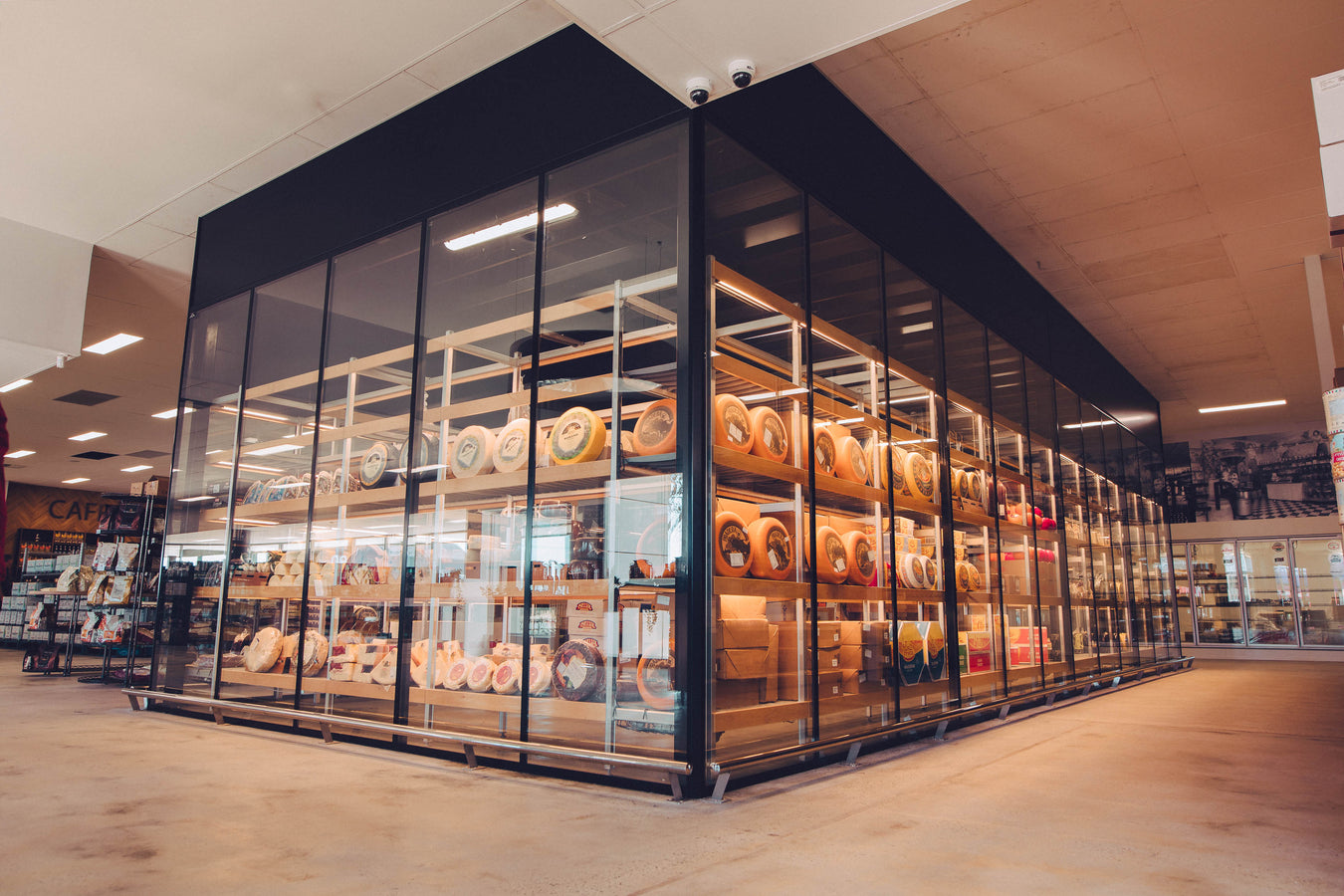
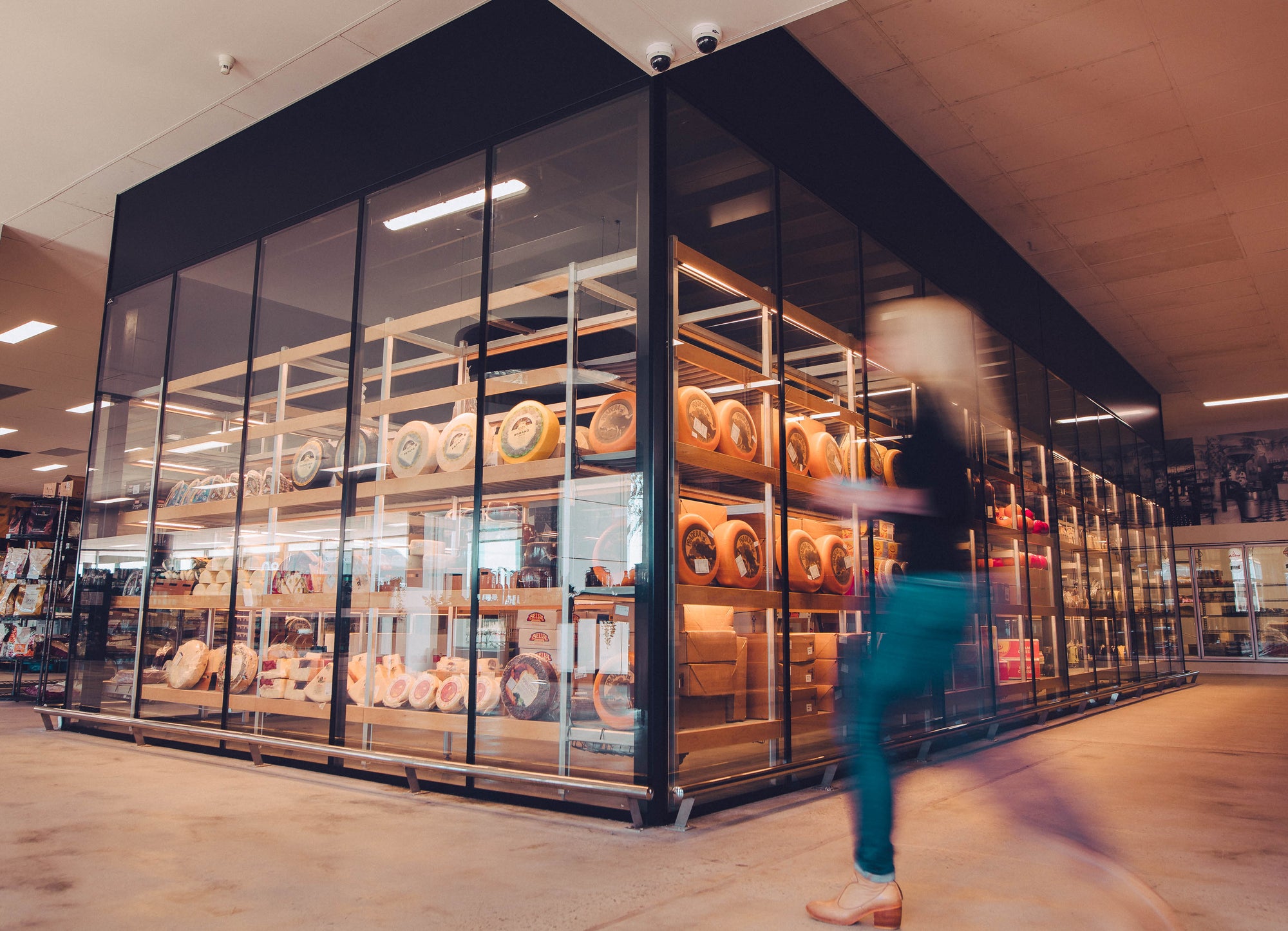
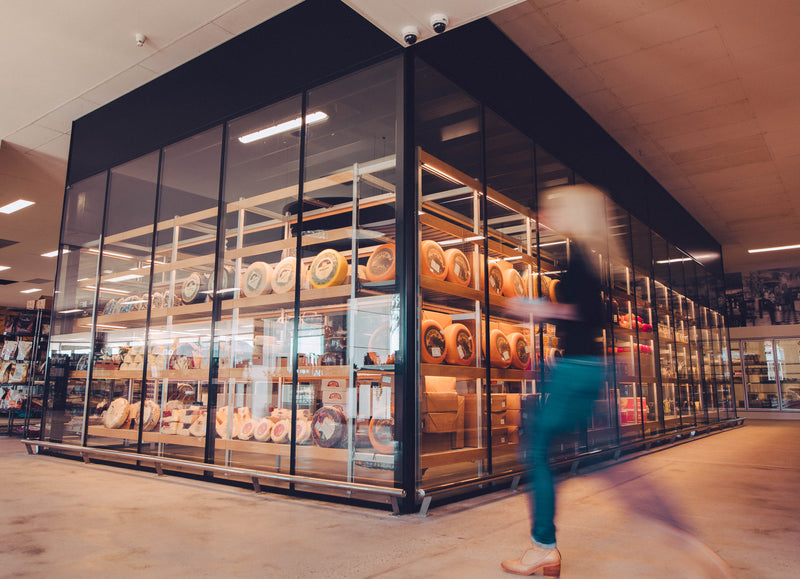
Browse our Cheese Room and you will find cheeses made from all these milks which are also categorised as fresh curd, surface ripened, smear ripened, cooked curd, hard, or blue


Fresh Curd cheeses such as ricotta, bocconcini and mozzarella are generally mild, high in moisture and low in fat. They exhibit a slightly acidic and lactic taste and are ideal for cooking


Surfaced Ripened cheeses such as Brie and Camembert exhibit a rich, runny texture. These cheeses should show straw like colours across the surface as the cheese ripens. These cheeses ripen from the outside in by the growth of healthy edible mould on the surface of the cheese.


Smear Ripened cheeses such as St Paulin and Livarot from France, Taleggio from Italy and Tarago River Jensen's Red from Tasmania are similar to surface ripened cheese but are washed to discourage the growth of mould and then kept moist to encourage the growth of certain bacteria. These cheeses range from rather spicy to outrageously piquant in taste and aroma, they can smell yeasty. The paste may resemble Brie or be more supple and elastic.


Cooked Curd cheeses include Swiss Edam, Emmental and Gouda from Holland. The curd is heated to remove moisture and concentrate the flavours


Hard Cheeses include many of the British varieties such as Cheddar, Wensleydale and Leicester, as well as Reggiano and Parmesan. The curd in hard cheese has had most of the moisture driven out by pressing and sometimes by the application of heat. Hard cheeses Generally aged from 12 to 24 months and as they mature the proteins break down and they develop and intense flavour. These are excellent to cook with and for cheese boards.


Blue Cheeses can be made from cow, sheep or goat milk and are neither pressed nor cooked. Most frequently the curd is crumbled. The blue mould is a strain of penicillin that is added to the milk before the rennet. This inoculation gives the cheese its characteristic flavour and aroma.


Image

Famous blue cheeses include, Stilton which only comes from the English counties of Leicestershire, Derbyshire and Nottingham, Gorgonzola from Lombardy in Northern Italy and Roquefort, a ships milk cheese from the South of France.


Culture


Cheese is consumed in most cultures that have a history of having domesticated milk producing animals. Interestingly, in East Asia where there is a high incidence of lactose intolerance, cheese consumption is rare.


Strict vegetarians may have issues with most cheese as rennet is an animal product so vegetarians can only eat cheeses made with a vegetarian rennet substitute.


Followers of Islam and Judaism may also have to eat a vegetarian rennet or ensure that rennet is processed according to Halal or Kosher rules.


Vegans eat no dairy so are precluded from eating any form of cheese


CHEESE BITES

Did you know
  • Top image

    "How can anyone govern a nation that has two hundred and forty-six different kinds of cheese?"

    Charles De Gaulle
  • Top image

    It takes 10 litres of milk to make 1 kilogram of Cheddar cheese

  • Top image

    "For Camembert, one finger on your eye and one on the cheese, if they feel the same, the cheese is ready."

    M Taittinger
  • Top image

    A farm in Sweden sells cheese made out of moose milk for over $1000 a kilo. This could be the most expensive cheese in the world.

  • Top image

    "A dinner which ends without cheese is like a beautiful woman with only one eye."

    Brillat-Savarin
  • The word "cheese" comes from the latin word "caseus" and casein is the milk protein found in cheese.

  • Top image

    Cheese is a valuable source of protein, calcium, phosphorus, amino acids and vitamins A, B12 and D and is very low in cholesterol

  • Top image

    Last year Australia produced 342,000 tonnes of cheese with 42% sold overseas earning $789 million in export dollars.

WHERE TO BUY?

Image

Find the closest shops and
restaurants stocking Blue Cow products.

Enter Post Code & Distance:

Curds & Whey

  1. Spotlight on... Bluecow Info 20-Apr-2011
  2. Best Before Dates versus Use By Dates Bluecow Info 19-Apr-2011
  3. Welcome to the new Blue Cow website Penny Elbery 03-Nov-2010
View All

CHEESE WIRE

Sign Up to our monthly newsletter